


Best Robotic Surgeon in Mumbai – Dr. Husain Gheewala
Advanced Robotic Colorectal Surgery for Precision, Faster Recovery & Better Outcomes
Dr. Husain Gheewala is a leading robotic surgeon in Mumbai, specialising in advanced robotic colorectal and abdominal procedures. Certified in robotic surgery from the internationally renowned Severance Yonsei Hospital in Seoul, South Korea, Dr. Gheewala combines state-of-the-art robotic technology with over a decade of surgical expertise to deliver superior patient outcomes.
With affiliations at Saifee Hospital, Wockhardt Hospital, and other premier hospitals in South Mumbai, Dr. Gheewala offers patients access to the most advanced minimally invasive surgical techniques available today.
About Dr. Husain Gheewala – Your Trusted Robotic Surgeon in Mumbai
Dr. Husain Gheewala is a distinguished Colorectal, Robotic, and Laparoscopic Surgeon practising in South Mumbai. His commitment to surgical excellence is reflected in his extensive international training and certifications.
Qualifications & Training:
- MBBS from MIMER Medical College, Pune
- Surgical training at Saifee Hospital, Mumbai – trained by the finest surgeons in Mumbai
- MRCS from the Royal College of Surgeons, Edinburgh, United Kingdom
- Fellowship in Colorectal Surgery (2 years) from York NHS Hospital, Yorkshire, United Kingdom
- Robotic Surgery Certification from Severance Yonsei Hospital, Seoul, South Korea
This unique combination of UK colorectal fellowship training and South Korean robotic surgery certification makes Dr. Gheewala one of the few surgeons in Mumbai equipped to perform complex robotic colorectal procedures with international-standard precision.
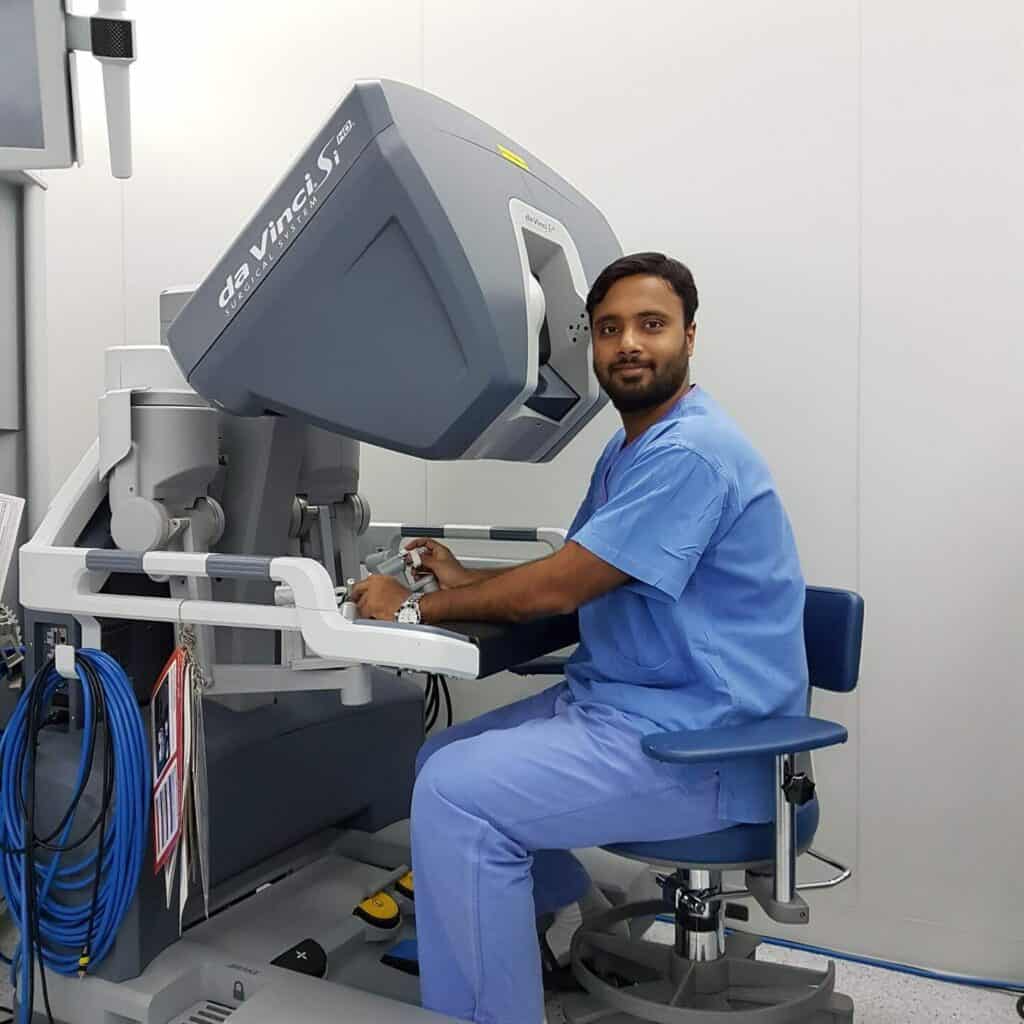
What Is Robotic Surgery? Understanding the Technology
Robotically assisted surgery, commonly referred to as robotic surgery, is an advanced minimally invasive surgical approach that allows surgeons to perform complex major operations through small incisions. The surgeon operates from a console, controlling robotic arms that translate hand movements into precise micro-movements inside the patient’s body.
Unlike traditional open surgery, robotic surgery provides the surgeon with a high-definition, three-dimensional view of the surgical site, along with instruments that can rotate and bend far beyond the capabilities of the human hand. This is particularly advantageous in colorectal surgery, where the operating space within the pelvis is narrow and precision is critical.
Key Features of Robotic Surgery:
- 3D high-definition magnified visualisation of the surgical area
- Wristed instruments with 360-degree articulation for precise movement
- Tremor filtration that eliminates natural hand tremor
- Smaller incisions compared to open surgery
- Enhanced ergonomics allowing the surgeon to operate with greater control for longer durations
Conditions Treated with Robotic Surgery by Dr. Gheewala
Dr. Gheewala utilises robotic surgical techniques to treat a wide range of colorectal and abdominal conditions, including:
Bowel Cancer
Robotic surgery enables precise removal of cancerous tissue in the colon and rectum while preserving surrounding healthy tissue and nerve function. This approach is particularly beneficial for rectal cancer, where preserving sphincter function is critical.
Haemorrhoids
While most haemorrhoid cases are managed with conventional or laser techniques, complex or recurrent cases involving significant prolapse may benefit from robotic-assisted approaches for more precise tissue handling.
Inflammatory Bowel Disease
Patients with Crohn’s disease or ulcerative colitis requiring surgical intervention benefit from the precision of robotic surgery, particularly for complex bowel resections and pouch procedures.
Rectal Prolapse & Pelvic Floor Disorders
Robotic-assisted rectopexy offers excellent outcomes for rectal prolapse with minimal postoperative discomfort and faster return to normal activities.
Diverticular Disease
Complex diverticular disease requiring sigmoid colectomy can be performed robotically with superior visualisation of the surgical field and reduced complication rates.
Complex Anal Fistula
Certain complex fistula cases, particularly those involving deep tissue planes, benefit from the enhanced precision of robotic-assisted techniques.
Benefits of Robotic Surgery – Why Patients Choose Robotic Procedures
Robotic surgery offers several significant advantages over traditional open surgery and even standard laparoscopic approaches:
Faster Recovery
Patient recovery and pain are minimal compared to open surgery. Most patients return to routine activities significantly faster, with hospital stays typically reduced by 2–3 days compared to open procedures.
Greater Surgical Precision
The robotic system’s 3D visualisation and articulating instruments allow Dr. Gheewala to perform complex surgeries with more precision, flexibility, and control than conventional techniques, particularly important in the narrow pelvic space during colorectal procedures.
Smaller Incisions & Less Scarring
Operations performed through small incisions mean less physiological trauma to the body, resulting in reduced blood loss and smaller, less visible scars.
Reduced Postoperative Pain
Smaller incisions and less tissue disruption translate directly into significantly reduced postoperative pain and lower requirement for pain medication.
Lower Complication Rates
The enhanced precision and visualisation of robotic surgery result in fewer surgical complications, including lower rates of infection and reduced risk of damage to surrounding nerves and blood vessels.
Better Nerve Preservation
In colorectal cancer surgery, particularly rectal cancer, robotic surgery offers superior ability to preserve urinary and sexual nerve function, significantly improving quality of life after surgery.
Robotic Surgery vs Laparoscopic Surgery vs Open Surgery – A Comparison
| Parameter | Robotic Surgery | Laparoscopic Surgery | Open Surgery |
| Incision Size | Very small (8-12mm ports) | Small (5-12mm ports) | Large (15-30cm) |
| Surgeon Visualisation | 3D HD magnified view | 2D screen view | Direct line of sight |
| Instrument Precision | Wristed, 360° articulation | Rigid, limited articulation | Direct hand control |
| Hospital Stay | 2-4 days typically | 3-5 days typically | 7-10 days typically |
| Recovery Time | 2-3 weeks | 3-4 weeks | 6-8 weeks |
| Postoperative Pain | Minimal | Moderate | Significant |
| Blood Loss | Minimal | Low to moderate | Higher |
| Best For | Complex pelvic & colorectal surgery | Standard abdominal procedures | Emergency or very advanced cases |
The Robotic Surgery Process – What to Expect
Step 1: Consultation & Diagnosis
Dr. Gheewala conducts a thorough evaluation including physical examination, review of imaging studies (CT scan, MRI, colonoscopy), and detailed discussion of your condition. He explains whether robotic surgery is the optimal approach for your specific case.
Step 2: Pre-Surgical Planning
Comprehensive pre-operative workup including blood tests, cardiac clearance if needed, and specific preparation instructions. Dr. Gheewala plans the surgical approach using advanced imaging to map the operative field.
Step 3: The Robotic Procedure
Under general anaesthesia, small incisions (8-12mm) are made for the robotic ports. Dr. Gheewala operates from the surgical console, controlling the robotic arms with precision. The 3D HD camera provides a magnified view of the surgical area.
Step 4: Recovery & Aftercare
Most patients experience significantly less pain than open surgery. Early mobilisation is encouraged. Typical hospital stay is 2-4 days. Dr. Gheewala provides detailed postoperative care instructions and schedules follow-up appointments to monitor recovery.
Why Choose Dr. Husain Gheewala as Your Robotic Surgeon in Mumbai?
- International Robotic Surgery Certification – Trained and certified at Severance Yonsei Hospital, Seoul, South Korea, one of Asia’s leading robotic surgery centres
- UK Colorectal Fellowship – 2-year fellowship in Colorectal Surgery from York NHS Hospital, Yorkshire, United Kingdom, providing deep expertise in complex colorectal conditions
- MRCS (Edinburgh) – Recognised by the Royal College of Surgeons, Edinburgh, demonstrating international surgical competency
- 10+ Years of Surgical Experience – Extensive surgical experience spanning the UK, South Korea, and India
- Premier Hospital Affiliations – Affiliated with Saifee Hospital, Wockhardt Hospital (Mumbai Central), Masina Hospital, Noor Hospital, Cumballa Hill Hospital, Apollo Spectra Hospital (Tardeo), and others
- Patient-Centred Approach – Known for being humble, easily approachable, and liked by all patients. Follows the principle of ‘First Do No Harm’ and ensures utmost patient comfort and safety
- Comprehensive Care – From initial consultation through surgery and recovery, Dr. Gheewala provides continuous encouragement and support for optimal healing
Hospitals Where Dr. Gheewala Performs Robotic Surgery in Mumbai
Dr. Gheewala performs robotic and advanced surgical procedures at the following premier hospitals in South Mumbai:
Frequently Asked Questions About Robotic Surgery in Mumbai
Schedule Your Robotic Surgery Consultation with Dr. Husain Gheewala
If you are considering robotic surgery or have been advised surgical intervention for a colorectal condition, Dr. Husain Gheewala can help you understand your options. With international robotic surgery certification, UK colorectal fellowship training, and over a decade of experience, you are in the hands of one of Mumbai’s most qualified robotic surgeons.
Take the first step towards a faster, more precise, and less painful surgical experience. Schedule your consultation today.