

Desk Job and Piles: How Sitting Affects Colon Health and Constipation
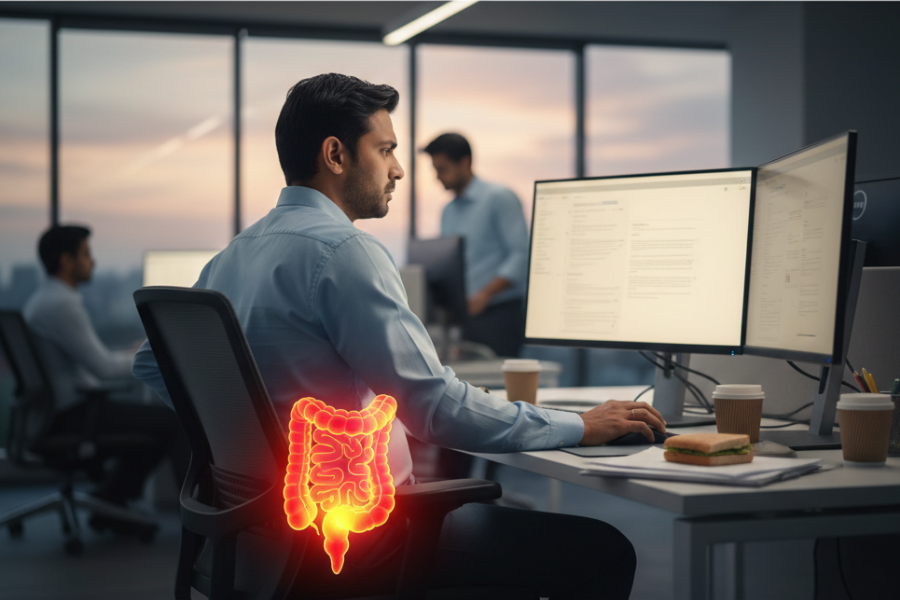
Modern work culture has changed dramatically. Most professionals now spend 8–10 hours sitting every day – at desks, in meetings, in cars, and later at home on screens.
While this affects posture and back pain, many people don’t realise prolonged sitting also impacts digestive and colorectal health.
A sedentary lifestyle slows bowel movement, increases pressure inside the abdomen, and raises the risk of piles (hemorrhoids), constipation, fissures, and other colon disorders.
Your gut is designed for movement.
When your body stops moving – your colon slows down.
1. What Happens Inside Your Body When You Sit Too Long
1.1 Slower Intestinal Motility
The colon moves stool forward using rhythmic contractions called peristalsis.
Movement stimulates these contractions.
Prolonged sitting causes:
- Reduced intestinal movement
- Delayed stool transit time
- Harder stools
- Constipation
This condition is often called slow transit bowel.
1.2 Increased Pressure in Pelvic Veins
Sitting continuously compresses veins around the rectum.
This leads to:
- Venous pooling
- Swollen rectal veins
- Formation of hemorrhoids (piles)
The longer you sit, the longer the veins remain under pressure.
2. Why Desk Workers Commonly Develop Piles
Hemorrhoids are not only caused by spicy food.
They are strongly linked to pressure and straining.
2.1 The Desk Job Cycle
Sedentary work → Constipation → Straining → Swollen veins → Bleeding piles
People often notice:
- Blood after passing stool
- Burning sensation
- Itching around anus
- Feeling of incomplete evacuation
Ignoring early symptoms can lead to persistent or prolapsing hemorrhoids.
2.2 Sitting After Meals Makes It Worse
After eating, the body activates the gastrocolic reflex – a natural urge to pass stool.
But when you continue sitting:
- Urge is suppressed
- Stool dries and hardens
- Next bowel movement becomes painful
3. Sedentary Lifestyle and Chronic Constipation
3.1 How Lack of Movement Affects Digestion
Physical movement stimulates:
- Abdominal muscles
- Colon contractions
- Blood circulation to intestines
Without activity:
- Digestion slows
- Gas accumulates
- Bloating increases
- Stool stays longer in colon
This leads to functional constipation.
3.2 Long-Term Consequences
Untreated constipation increases risk of:
- Anal fissures
- Hemorrhoids
- Rectal prolapse
- Fecal impaction
- Diverticular disease
4. Warning Signs Your Colon Is Becoming Sluggish
Watch for these symptoms:
- Passing stool less than 3 times a week
- Hard or pellet-like stool
- Straining during bowel movement
- Feeling of blockage
- Prolonged toilet sitting
- Rectal bleeding
- Persistent bloating
These are early indicators of poor colorectal motility.
5. Movement: The Simplest Treatment for Gut Health
The colon responds strongly to physical activity.
Even light movement improves bowel function.
5.1 The One-Minute Rule
Every hour:
- Stand up
- Walk for 60 seconds
- Stretch hips and abdomen
This reduces pelvic venous pressure.
5.2 Hydration and Bowel Rhythm
Water softens stool and stimulates colon reflexes.
Aim for regular intake across the day rather than large amounts at once.
5.3 Best Activities for Colon Function
Helpful activities include:
- Walking
- Squatting movements
- Core activation exercises
- Gentle stretching
- Post-meal movement
Regular movement acts as a natural laxative.
6. Preventing Work-Related Colorectal Problems
6.1 Workplace Habits That Help
- Avoid holding stool
- Don’t sit on the toilet long with phone use
- Take short walking breaks
- Maintain fixed bowel timing
- Use ergonomic seating
6.2 Lifestyle Adjustments
Combine movement with:
- Fiber-rich diet
- Adequate hydration
- Regular sleep cycle
Together they restore normal bowel rhythm.
Conclusion
The human digestive system is designed for movement – not prolonged sitting.
A sedentary routine slows the colon, increases venous pressure, and contributes to piles, constipation, and other colorectal disorders.
Small habits like standing hourly, staying hydrated, and maintaining regular physical activity can significantly improve bowel function. However, if symptoms such as rectal bleeding, persistent constipation, anal pain, or hemorrhoids continue despite lifestyle changes, consulting an experienced Piles Surgeon in Mumbai can help identify the underlying cause and provide appropriate treatment before complications develop.