

Why Piles Come Back After Treatment | Causes of Recurrent Hemorrhoids
Many patients feel frustrated when piles return after treatment.
They assume:
- The treatment failed
- Surgery didn’t work
- The condition is permanent
But in most cases, recurrent hemorrhoids are not due to bad luck – they are due to the same pressure patterns repeating inside the rectum.
Piles develop when veins in the anal canal repeatedly face strain.
If the pressure continues, the veins swell again – even after successful treatment.
Your colon heals only when your daily habits change.
1. Understanding What Actually Causes Piles
Hemorrhoids are swollen vascular cushions in the anal canal.
They enlarge when pressure inside the abdomen and pelvic veins increases repeatedly.
1.1 The Pressure Mechanism
The rectum works like a pressure chamber.
When pressure rises:
- Veins stretch
- Blood pools
- Tissue bulges outward
Over time, this leads to bleeding, prolapse, itching, and discomfort.
1.2 Why They Reappear
Treatment removes enlarged tissue, but it does not remove the cause of pressure.
If habits remain unchanged, the same stress rebuilds new hemorrhoids.
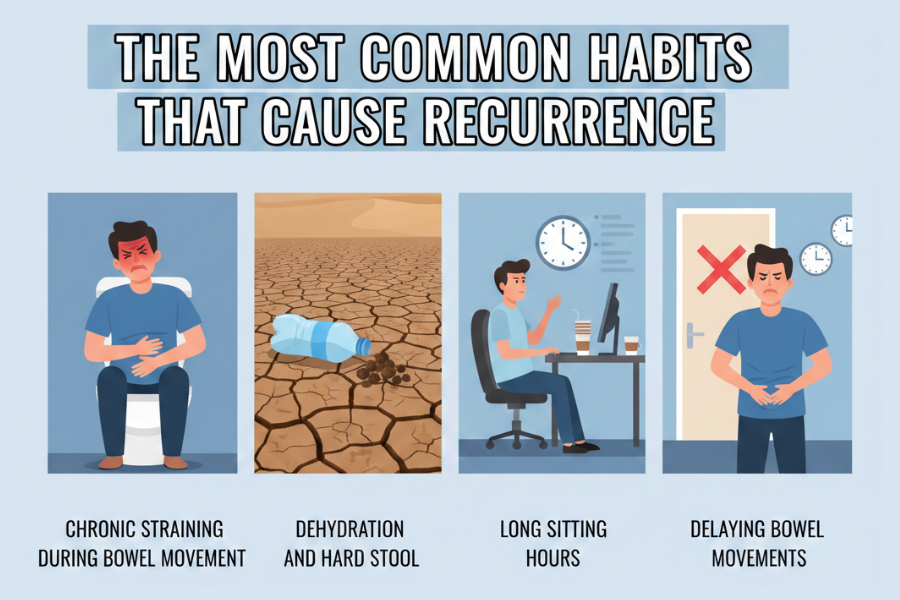
2. The Most Common Habits That Cause Recurrence
2.1 Chronic Straining During Bowel Movement
Straining is the single biggest trigger.
It occurs due to:
- Hard stool
- Irregular bowel timing
- Ignoring natural urge
- Prolonged toilet sitting
Repeated straining pushes veins downward and weakens supporting tissue.
2.2 Dehydration and Hard Stool
Low water intake leads to dry stool.
Hard stool causes:
- Excessive pushing
- Micro-injury to anal lining
- Increased venous pressure
Many people focus only on fiber but forget hydration is equally important.
2.3 Long Sitting Hours
Prolonged sitting – especially desk jobs – creates continuous pressure in pelvic veins.
Effects include:
- Blood pooling in rectal veins
- Reduced venous return
- Swelling of hemorrhoidal cushions
Even successful surgery cannot prevent recurrence if daily sitting habits remain unchanged.
2.4 Delaying Bowel Movements
Ignoring the urge to pass stool causes stool to remain longer in the colon.
Water gets absorbed → stool becomes hard → straining increases
This recreates the same cycle that formed piles initially.
3. Why Surgery Alone Cannot Prevent Piles
Hemorrhoid procedures remove enlarged tissue but do not change bowel mechanics.
3.1 What Treatment Fixes
- Bleeding
- Prolapse
- Pain
- Swelling
3.2 What Treatment Does Not Fix
- Constipation patterns
- Straining habit
- Sedentary lifestyle
- Poor hydration
- Irregular bowel timing
Without correcting these, pressure builds again – leading to recurrence.
4. The Recurrence Cycle Explained
Constipation → Straining → Vein Swelling → Piles → Treatment → Same habits → Piles again
This loop continues until bowel behavior changes.
Hemorrhoids are therefore considered a lifestyle-associated colorectal condition rather than only a surgical problem.
5. Signs You Are Recreating the Same Problem
Watch for early indicators:
- Spending more than 5–7 minutes in toilet
- Reading or using phone during bowel movement
- Hard or pellet-like stool
- Bleeding after constipation
- Feeling incomplete evacuation
- Sitting continuously for hours
These suggest pressure is rebuilding in rectal veins.
6. How the Colon Actually Heals
The anal cushions shrink naturally when pressure reduces consistently.
6.1 Bowel Behavior Correction
Helpful habits include:
- Passing stool at the first urge
- Avoiding straining
- Maintaining regular timing
- Short toilet duration
6.2 Daily Pressure Reduction
Important steps:
- Adequate hydration
- Regular movement
- Avoid prolonged sitting
- Balanced fiber intake
When pressure reduces, veins gradually return to normal size.
Conclusion
Recurrent piles are rarely random. They usually indicate the same physical stress is continuing inside the anal canal.
Treating hemorrhoids without correcting bowel habits leads to repetition of the problem. While modern procedures can effectively remove enlarged hemorrhoids, long-term success depends on reducing the pressure that caused them. If you continue to experience recurring symptoms such as bleeding, swelling, or discomfort, consulting an experienced Piles Surgeon in Mumbai can help identify the underlying causes and create a treatment plan that focuses on both relief and prevention.